

February 2022 Interview with Rick Hwang, President of Rugged & Video Solutions Business Group at Getac

Getac's Mighty Class of 2021
January 2021 Interview with Rick Hwang, President of Rugged & Video Solutions Business Group at Getac

Getac V110 at Cirque du Soleil

Getac 25th Anniversary at 2014 Miramar Air Show

Getac FedEx TechConnect

TDI Panamericana 2011 team using Getac V100 on 16,000 mile endurance challenge
|

|

|
|
Getac S510AD
Getac brings AMD Ryzen AI technology to its 15.6-inch S510 rugged laptop. Same proven platform, different architecture — and some impressive performance gains.
(by Conrad H. Blickenstorfer; photography by Carol Cotton)
The original Getac S510 was introduced on May 28, 2024, and marketed by the company as the world's first AI-ready rugged laptop featuring Intel Core Ultra processors and a dedicated Microsoft Copilot key. The S510 was an entirely new design — not an upgrade or update to an existing model. It was for customers who wanted a state-of-the-art rugged laptop with a larger screen, and the S510's 15.6-inch display addressed just that.
Then, on October 8, 2025, about 16 months later, Getac announced the S510AD. And even though the S510AD looks pretty much identical to the original S510, that, again, wasn't an upgrade or update. It was an S510 powered not by Intel, but by rival AMD's equivalent to Intel's Core Ultra — the AMD "Krackan Point" Ryzen AI processing technology.
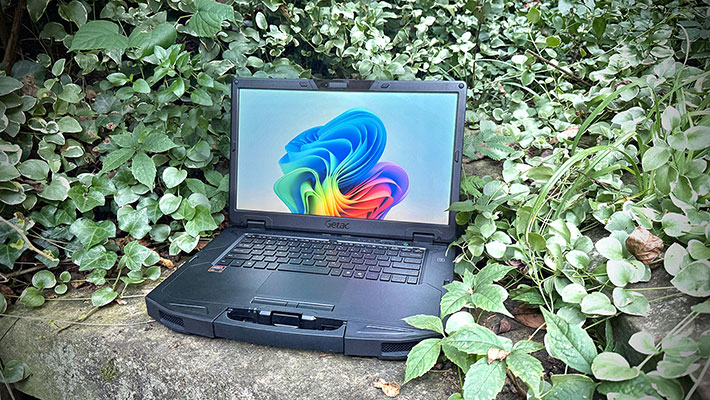
The question, then, is why Getac decided to offer what is essentially the same rugged laptop with an entirely different processor platform. The S510AD has the same size, display, batteries, ruggedness specifications, and much of the same functionality as the Intel-based S510. What changes is the processing architecture inside — and that gives us a rare opportunity to see what AMD's Ryzen AI technology brings to an otherwise almost identical rugged laptop platform.
The AMD-based Getac S510AD
Looking at the S510AD and the original Intel-based S510 side by side, it's immediately obvious just how closely related the two are. In fact, from the outside they are essentially the same computer. Both measure 14.8 x 10.9 x 1.5 inches, both have the same 15.6-inch 1920 x 1080 display with a 1,000-nit backlight, both accommodate one or two 74.5 watt-hour batteries, and both carry the same three-foot drop and IP53 ruggedness ratings.
|
|
|
|
|
|
|
Getac model
|
S510AD
|
S510
|
|
|
Size (inches)
|
14.8 x 10.9 x 1.5
|
14.8 x 10.9 x 1.5
|
|
|
Processor
|
AMD Ryzen AI 300 Series
|
Intel Meteor Lake U-Series
|
|
|
Graphics
|
Radeon 840M / 860M
|
Intel Graphics
|
|
|
NPU
|
AMD XDNA 2
|
Intel AI Boost
|
|
|
NPU performance
|
Up to 50 TOPS
|
11 TOPS
|
|
|
Thermal Design Power (TDP)
|
28W default / 15-54W configurable
|
15W base/57W max turbo
|
|
|
Cooling
|
Active (fan)
|
Active (fan)
|
|
|
Display size (inches)
|
15.6 (1920 x 1080)
|
15.6 (1920 x 1080)
|
|
|
Luminance
|
1000 nits
|
1000 nits
|
|
|
Main Battery capacity
|
74.5 watt-hours
|
74.5 watt-hours
|
|
|
2nd Battery capacity
|
74.5 watt-hours
|
74.5 watt-hours
|
|
|
Battery consumption
|
13.19 whr/hour
|
10.75 whr/hour
|
|
|
Drop spec
|
3 feet
|
3 feet
|
|
|
Sealing
|
IP53
|
IP53
|
|
|
Starting price
|
inquire
|
US$2,169
|
The primary difference is what's inside. Instead of Intel's "Meteor Lake" Core Ultra processors, the S510AD uses AMD Ryzen AI 300 Series processors, specifically AMD's "Krackan Point" Ryzen AI 5 and Ryzen AI 7 chips. With them come AMD Radeon integrated graphics and AMD's XDNA 2 neural processing technology.
That makes the S510AD interesting for reasons that go beyond simply offering customers a choice between Intel and AMD. Since almost everything else remains the same, the two S510 versions provide an unusually good opportunity to compare competing processor architectures in essentially the same rugged laptop platform.
There are some potentially significant differences. The AMD processors' XDNA 2 NPU is rated at up to 50 TOPS, compared to 11 TOPS for the Intel Core Ultra processors used in the original S510. That puts the S510AD comfortably above Microsoft's 40 TOPS NPU requirement for Copilot+ PCs, whereas the original S510's first-generation Core Ultra processors predated that requirement.
Graphics are different as well. Depending on processor choice, the S510AD uses AMD Radeon 840M or 860M integrated graphics, whereas the Intel S510 uses Intel Graphics. Both platforms can also be equipped with optional discrete NVIDIA graphics, though the S510AD uses the newer RTX A500 rather than the GTX 1650 offered in the original S510.
So why did Getac create an AMD version of a rugged laptop that already existed and was barely a year and a half old? At first, the answer wasn't obvious to us. There certainly are organizations that prefer one processor architecture over another, and AMD's current Ryzen AI technology brings strong graphics and considerably more NPU performance. As we'll see, however, there may be more to Getac's move toward AMD than simply processor preference.

Design, look and feel
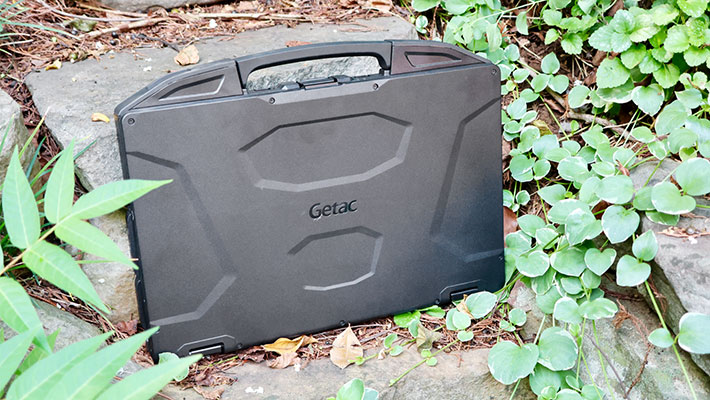
The S510AD may have an entirely different processor architecture inside, but externally it's still very much an S510 — and a Getac. It's a tool for work in the field, practical and functional and, well, kind of industrial. There is no futuristic George Jetson design here. If anything, the S510AD looks almost subdued even by Getac's standards of understated form-follows-function design. There is a bit of Getac's embossing and beveling design language, but zero gloss or trim. It's almost a stealth machine.
 In fact, physically the S510AD is essentially identical to the Intel-based S510 we reviewed in 2024. It measures the same 14.8 x 10.9 x 1.5 inches and has the same 5.18-pound starting weight. Even with two batteries and a number of options, that's surprisingly trim for a rugged laptop with a big 15.6-inch display. In fact, physically the S510AD is essentially identical to the Intel-based S510 we reviewed in 2024. It measures the same 14.8 x 10.9 x 1.5 inches and has the same 5.18-pound starting weight. Even with two batteries and a number of options, that's surprisingly trim for a rugged laptop with a big 15.6-inch display.
Six pounds is six pounds, but that's really not much for a rugged 15.6-inch laptop that can even accommodate an optical drive (yes, those are still around). And Getac includes a nicely designed flexible carry handle, something that makes a lot of sense on a larger laptop that's likely to be carried around in the field.
Below is the S510AD from the top and all four sides. Outside, the laptop is all some sort of black polycarbonate and rubberized materials. It won't dent, ever, and doesn't look like it easily scratches. When you close the lid, you can lock it in place.
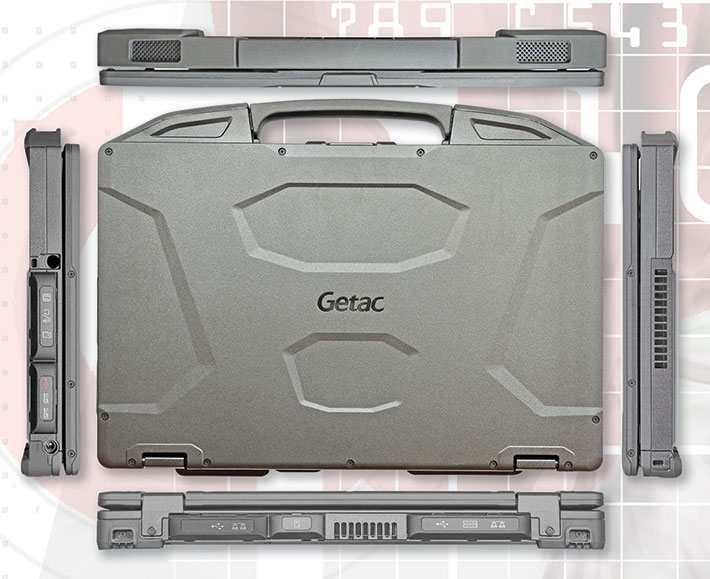
The businesslike, utilitarian looks of the S510AD almost make one forget that, unlike Getac's fully rugged models, this laptop was not designed to be waterproof. It is, however, "water resistant," which means it can handle a spill onto its keyboard and also a good bit of rain. And there are protective doors that keep liquids away from ports. But the S510AD is not a sealed machine. There are air vents and other openings to the inside through which liquids might get in.
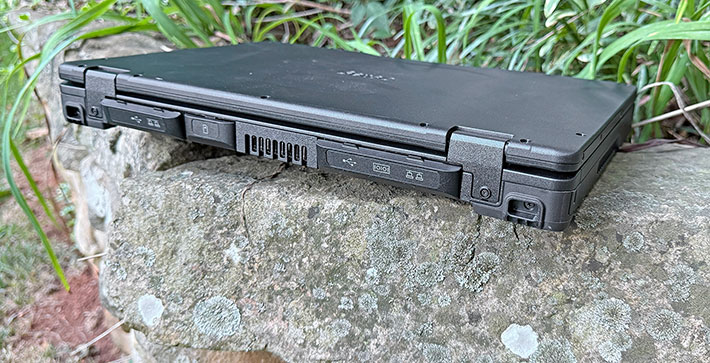
As far as wired connectivity goes, the S510AD is nicely equipped. As on the original S510, Getac provides a configurable I/O area for additional legacy and specialized connectivity. In the image below, along the backside (shown below with protective port covers removed) are from left to right an HDMI 2.0 port to connect a monitor, a USB 3.2 Gen 2 Type-A port, an RJ45 gigabit LAN jack and an optional Nano-SIM card slot.

On the right side are, from left to right, the stylus slot, the optional Smart card reader slot, the 3.5mm combo audio jack, the optional microSD card reader, a USB 3.2 Gen 2 port, two USB4 Type-C ports, and finally the power connector. Of particular note are the USB4 Type-C ports, one standard and a second optional. These replace the Thunderbolt 4 connectivity of the Intel-based S510 while providing much the same type of high-speed, multi-purpose USB-C functionality.

The front features a nicely designed and fully integrated flexible and spring-loaded rubber handle, as well as the unit's two speakers and a couple of annunciator LEDs for battery and power/sleep status.
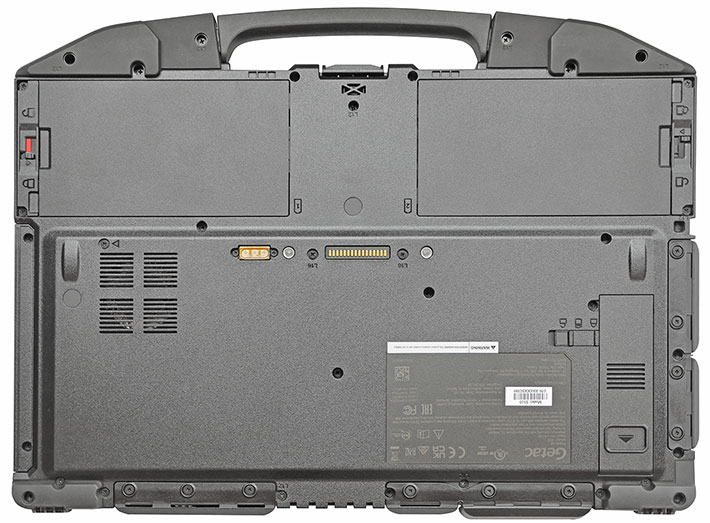
On the bottom of the S510AD are the two batteries, one standard and one optional. Both are the exact same size and type. The batteries snap into place and have a spring-loaded lock, but they don't have a seal like they would on a fully rugged design.  There is no access door to system RAM and expansion slots. On the bottom right is the quick-release Solid State Disk. There is no access door to system RAM and expansion slots. On the bottom right is the quick-release Solid State Disk.
We didn't take the S510AD apart to see what things look inside. From the looks of it, it appears as if electronics and such would be accessible not from the bottom, but from beneath the keyboard on top.
As usual with Getac: screw holes where the long screws go are clearly marked. This way getting all the screws back into their proper place isn't trial-and-error. Service technicians will be grateful.
The protective doors are all screwed on. That makes for easy replacement. Or S510 users who work on their laptops in an office may opt to remove the protective doors entirely for easier access to the ports.
Like the Intel-based S510, the S510AD uses fast PCIe NVMe solid state storage. 256GB is standard, with options up to 2TB. There's secondary storage as well, but it's a bit limited — unlike primary storage, the  secondary drive uses the older, slower SATA interface protocol, which also precludes RAID configuration. It's limited to 1TB and resides in the Multimedia bay where every option is either/or. secondary drive uses the older, slower SATA interface protocol, which also precludes RAID configuration. It's limited to 1TB and resides in the Multimedia bay where every option is either/or.
 Getac also continues its use of PCR — Post-Consumer Recycled — materials as part of its efforts toward more sustainable manufacturing practices. The company began emphasizing PCR content with the most recent generation of the S410, and the S510 platform uses about 45% PCR materials overall. Getac also continues its use of PCR — Post-Consumer Recycled — materials as part of its efforts toward more sustainable manufacturing practices. The company began emphasizing PCR content with the most recent generation of the S410, and the S510 platform uses about 45% PCR materials overall.
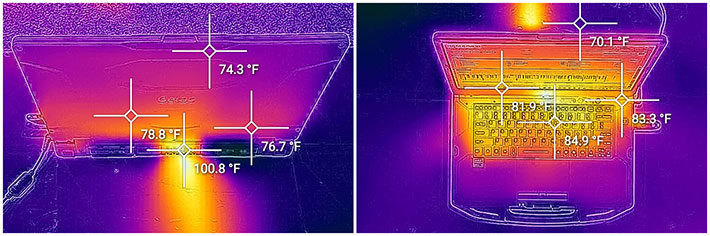
Finally, we used one of our lab's thermal cameras to see how the S510AD handles the heat generated by its AMD Ryzen AI processor and related circuitry, including the NVIDIA Quadro RTX A500 discrete graphics controller. The images below were taken while the S510AD was running the PCMark 10 benchmark.
On the left we're looking down at the fan exhaust in the back of the unit. The highest temperature there is about 100F, which means that things are well under control. On the right, a look down onto the keyboard, underneath which all the electronics are. No problem there either, with the hottest spot only in the mid 80s. These figures are roughly the same as we recorded on the Intel-based S510.
Keyboard and touchpad
A good, solid keyboard can make or break a laptop in the field. If it doesn't get the job done, one might as well use a tablet instead of a laptop. Overall, Getac has been experimenting with their laptop keyboards quite a bit over the years. 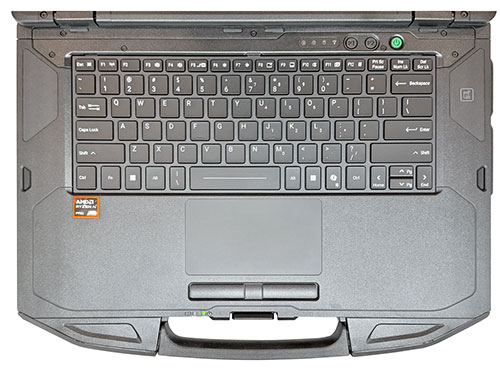
Right off the bat, the S510AD keyboard looks good. It's an "island-style" 83-key backlit membrane design with just the right amount of travel and tactile feedback. It also feels nice and solid, without the "flex" that laptop keyboards often have.
The all-important QWERTY part of the keyboard is 100% scale, i.e. the distance from the center of the "Q" to the center of the "P" is exactly 6.75 inches. That's crucial for touch typists or anyone else used to a full-scale keyboard.
The white-on-black lettering is both functional and elegant, more so than the fatter and busier lettering on the S410. In fact, it reminds us much of the excellent standard Apple keyboard.
The touchpad and mouse button design is standard. There are two slightly curved mouse keys, and the large 4-1/4 x 2-1/2 inch pad area is very slightly recessed. It uses capacitive multi-touch and works smoothly, but, like other Getac touchpads, still has a bit too much stiction for precise movement. What is "stiction"? It's defined as "the friction that tends to prevent stationary surfaces from being set in motion." The stationary surface, in this instance, is the finger, and it takes a bit of force to move it, rather than just glide away.
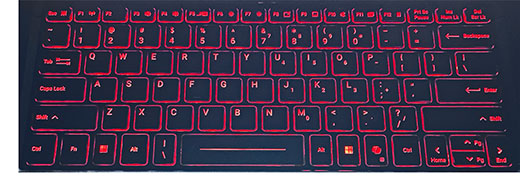 The S510AD has an LED-based keyboard backlight that can be activated and toggled through three brightness settings via a function key combination. The red illumination is pleasant and clearly illuminates the keys in semi and full darkness. The S510AD has an LED-based keyboard backlight that can be activated and toggled through three brightness settings via a function key combination. The red illumination is pleasant and clearly illuminates the keys in semi and full darkness.
Like the original S510, the S510AD also has the dedicated Microsoft Copilot key that has since become standard on many newer Windows laptops.
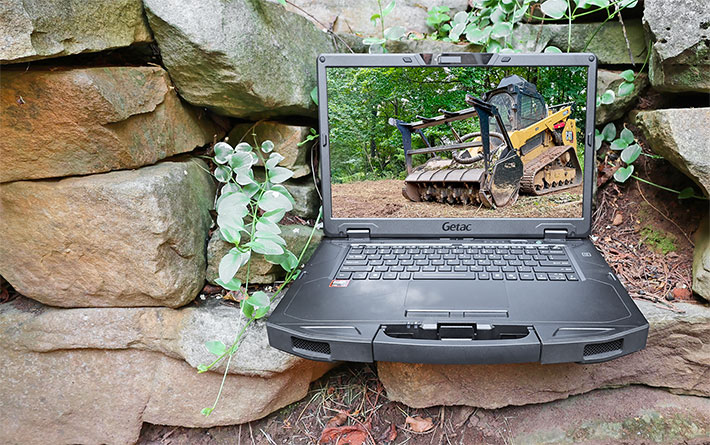
AMD "Krackan Point" Ryzen AI processor performance
For decades, Intel processors have been almost synonymous with rugged Windows laptops. That's certainly been the case with Getac, where successive generations of rugged notebooks generally followed Intel's processor roadmap. The S510AD therefore represents a significant departure.
Getac offers the S510AD with a choice of four AMD Ryzen AI 300 Series processors, all based on AMD's "Krackan Point" architecture. There are Ryzen AI 5 and Ryzen AI 7 versions, and each is available either as a standard processor  or in an AMD PRO version intended for enterprise deployments requiring additional security, management, and platform stability features. or in an AMD PRO version intended for enterprise deployments requiring additional security, management, and platform stability features.
The Ryzen AI 5 chips combine three high-performance Zen 5 cores with three more power-efficient Zen 5c cores, whereas the Ryzen AI 7 versions have four of each. All four include AMD's XDNA 2 neural processing unit with performance of up to 50 TOPS. The Ryzen AI 5 versions use Radeon 840M integrated graphics, while the Ryzen AI 7 versions step up to more powerful Radeon graphics.
The table below shows the four processor options available for the S510AD (see full table):
|
Getac S510AD: Processor Options
|
|
Available Getac S510AD CPUs
|
AMD Ryzen AI 5
|
AMD Ryzen AI 5
|
AMD Ryzen AI 7
|
AMD Ryzen AI 7
|
|
Model
|
340
|
PRO 340
|
350
|
Pro 350
|
|
Model Code
|
Krackan Point
|
Krackan Point
|
Krackan Point
|
Krackan Point
|
|
Performance cores
|
3
|
3
|
4
|
4
|
|
Efficient cores
|
3
|
3
|
4
|
4
|
|
Base clock
|
2.0 GHz
|
2.0 GHz
|
2.0 GHz
|
2.0 GHz
|
|
Max boost clock
|
up to 4.80 GHz
|
up to 4.80 GHz
|
up to 5.00 GHz
|
up to 5.00 GHz
|
|
NPU
|
XDNA 2 (up to 50 TOPS)
|
XDNA 2 (up to 50 TOPS)
|
XDNA 2 (up to 50 TOPS)
|
XDNA 2 (up to 50 TOPS)
|
|
Default TDP
|
28 watts
|
28 watts
|
28 watts
|
28 watts
|
|
Configurable TDP
|
15/54 watts
|
15/54 watts
|
15/54 watts
|
15/54 watts
|
|
L3 Cache
|
16MB
|
16MB
|
16MB
|
16MB
|
|
Graphics
|
AMD Radeon 840M
|
AMD Radeon 840M
|
AMD Radeon 860M
|
AMD Radeon 860M
|
|
Graphics cores
|
4
|
4
|
8
|
8
|
|
Graphics max speed
|
2.90 GHz
|
2.90 GHz
|
3.00 GHz
|
3.00 GHz
|
|
AMD PRO Technologies
|
No
|
Yes
|
No
|
Yes
|
There are some interesting similarities between AMD's approach and Intel's. Both now combine different types of processor cores, integrated graphics, and dedicated neural processing hardware in a single mobile processor package. But the architectures themselves are quite different.
AMD's Ryzen AI 300 Series combines conventional high-performance Zen 5 cores with smaller Zen 5c cores. That's conceptually similar to Intel's use of Performance and Efficient cores, but not identical. AMD's Zen 5 and Zen 5c cores use essentially the same instruction architecture; Zen 5c is optimized primarily for greater density and efficiency rather than representing the distinctly different type of core that Intel's E-cores do.
Of particular interest in the S510AD is AMD's second-generation XDNA 2 NPU. All four processor choices are rated at up to 50 TOPS of NPU performance. That's a substantial increase over the 11 TOPS Intel AI Boost NPU in the first-generation Core Ultra processors available in the original S510, and enough to meet Microsoft's 40 TOPS NPU requirement for Copilot+ PCs.
There's also AMD's integrated Radeon graphics. Ryzen processors have long had a reputation for strong integrated graphics, and the Ryzen AI 300 Series continues that approach with RDNA 3.5-based Radeon graphics. How much difference all of this makes in an actual rugged laptop is, of course, what we're interested in finding out.
One thing the AMD processors do not eliminate is the need for active cooling. AMD lists a default TDP of 28 watts for these processors, configurable between 15 and 54 watts. That's substantial power for a mobile processor, and the S510AD, like its Intel-based sibling, uses fan cooling.
So how does all of this translate into actual performance? To find out, we ran our standard performance benchmark suites on the S510AD — PassMark 6.1 and 9, CrystalMark, PCMark 10, 3D Mark, and GeekBench. For comparison we added the Intel-based Getac S510 that we tested when it first came out in 2024. And we also added four other Tier 1 15.6-inch class rugged laptops, Getac's own X600 mobile workstation, the LT355 from DT Research, the Durabook Z14I, and the Winmate L156AD (where AD stands for Alder Lake, not Android).
|
Getac S510AD Benchmarks and Comparisons
|
|
Manufacturer
|
Getac
|
Getac
|
Getac
|
DT Research
|
Durabook
|
Winmate
|
|
Model
|
S510AD
|
S510
|
X600
|
LT355
|
S15
|
L156AD
|
|
Year tested
|
2026
|
2024
|
2023
|
2026
|
2023
|
2024
|
|
Display size
|
15.6
|
15.6
|
15.6
|
15.6
|
15.6
|
15.6
|
|
Display luminance
|
850 nits
|
1062 nits
|
1223 nits
|
1225 nits
|
1033 nits
|
766 nits
|
|
CPU Type
|
AMD Ryzen AI 7
|
Intel Core Ultra i7
|
Intel Core i9
|
Intel Core i7
|
Intel Core i7
|
Intel Core i7
|
|
CPU Model and gen
|
PRO 350
|
165U (14th)
|
11950H (11th)
|
1370P (13th)
|
1255U (12th)
|
13700H (13th)
|
|
Thermal Design Power (TDP)
|
15/54 watts
|
15/57 watts
|
35/45 watts
|
???? watts
|
15/55 watts
|
45/115 watts
|
|
Discrete GPU
|
RTX A500
|
GTX1650
|
RTX3000
|
RTX A2000
|
None
|
RTX A1000
|
|
PassMark 6.1
|
10,050
|
13,599
|
8,221
|
11,598
|
8,186
|
18,369
|
|
PassMark 9.0
|
7,247
|
5,818
|
6,562
|
6,509
|
5,568
|
7,613
|
|
CrystalMark
|
592,696
|
469,111
|
1,016,250
|
1,015,554
|
424,336
|
947,568
|
|
PCMark 10 Overall
|
7,043
|
5,599
|
6,258
|
7,923
|
5,881
|
6,546
|
|
PCMark 10 Essentials
|
10,171
|
9,740
|
9,613
|
10,086
|
10,856
|
10,509
|
|
PCMark 10 Productivity
|
10,777
|
8,958
|
8,378
|
16,182
|
7,293
|
9,514
|
|
PCMark 10 Content Creation
|
8,648
|
5,461
|
8,260
|
8,285
|
5,920
|
7,614
|
|
PCMark 10 Drive
|
1,892
|
1,094
|
2,059
|
1,468
|
1,785
|
1,119
|
|
PCMark 10 Battery
|
11:18 hrs
|
13:24 hrs
|
9:02 hrs
|
8:04 hrs
|
7:08 hrs
|
4:15 hrs
|
|
Watt-Hours/Hour
|
13.19
|
10.75
|
16.49
|
15.26
|
7.85
|
17.50
|
|
3DMark Time Spy
|
4,095
|
3,138
|
5,989
|
NA
|
1,624
|
2,476
|
|
GeekBench 5 Single
|
2,053
|
1,644
|
1,589
|
2,634
|
1,163
|
1,787
|
|
GeekBench 5 Multi
|
11,052
|
6,280
|
6,490
|
7,855
|
6,471
|
10,429
|
|
GeekBench 5 Open CL
|
78,546
|
37,375
|
76,335
|
67,135
|
17,404
|
19,990
|
So what can we learn from these benchmarks? Quite a bit. And for this review, the most interesting comparison isn't necessarily between the S510AD and all the other 15.6-inch rugged laptops in the table. It's between the AMD-based S510AD and the original Intel-based S510. The two use essentially the same Getac platform, which makes this about as close to an AMD-versus-Intel comparison as we're likely to get in rugged laptops.
 The results are interesting. In the PCMark 10 overall benchmark, which exercises the kind of tasks typically encountered in everyday Windows use, the AMD-based S510AD scored 7,043 versus 5,599 for the Intel S510. That's a substantial 26% advantage. CrystalMark likewise showed the S510AD about 26% ahead, and in PassMark 9.0 the AMD machine held a roughly 25% advantage. The results are interesting. In the PCMark 10 overall benchmark, which exercises the kind of tasks typically encountered in everyday Windows use, the AMD-based S510AD scored 7,043 versus 5,599 for the Intel S510. That's a substantial 26% advantage. CrystalMark likewise showed the S510AD about 26% ahead, and in PassMark 9.0 the AMD machine held a roughly 25% advantage.
Not every benchmark favored AMD. Our old PassMark 6.1 suite actually had the Intel S510 well ahead, 13,599 versus 10,050. That's a reminder that benchmarks don't all measure the same things, and that old benchmark suites in particular may not take equal advantage of newer processor architectures. That's one reason why we continue to run several different benchmark suites rather than relying on just one number.
Geekbench 5 showed much the same picture. In single-core performance, the S510AD scored 2,053 versus 1,644 for the Intel S510, an advantage of about 25%. The difference was considerably larger in multi-core performance, where the AMD system scored 11,052 versus 6,280, an advantage of about 76%. OpenCL graphics performance was also much higher, though that comparison needs to be viewed with caution because our S510AD came with NVIDIA RTX A500 discrete graphics whereas the original S510 test unit had a GTX 1650.
The 3DMark Time Spy results likewise favored the S510AD, 4,095 versus 3,138, but here again we're not comparing just AMD Radeon against Intel integrated graphics; the two review units had different NVIDIA discrete graphics options. So those numbers tell us more about the performance of the tested systems than about AMD versus Intel graphics alone.
There is another side to the performance story: power consumption. In our PCMark 10 battery test, the Intel S510 lasted 13 hours and 24 minutes, whereas the S510AD ran for 11 hours and 18 minutes. Since both use the same 74.5 watt-hour battery, the calculated average draw tells the story: 10.75 watt-hours per hour for the Intel machine versus 13.19 for the AMD S510AD. So in our testing, the additional performance of the AMD system came with measurably higher power consumption.
Overall, that's a pretty compelling showing for AMD. The S510AD isn't simply an S510 for customers who happen to prefer AMD processors. In most of our current benchmark suites, the AMD-equipped S510AD substantially outperformed the Intel-equipped S510 as Getac configured the two systems we tested. It didn't win everything, and some of the graphics results are influenced by different discrete GPUs, but the overall performance advantage is difficult to miss.
And none of these traditional benchmarks really measures what may be the biggest architectural difference between the two systems: AI processing. The first-generation Core Ultra processor in the original S510 has an Intel AI Boost NPU rated at 11 TOPS. The AMD Ryzen AI processor in our S510AD has an XDNA 2 NPU rated at up to 50 TOPS. That's more than four times the theoretical NPU performance, and enough to qualify the S510AD as a Microsoft Copilot+ PC.
So, at least in terms of performance, Getac's decision to offer an AMD version of the S510 makes considerable sense. The AMD machine is generally faster in our testing, has much more NPU performance, and brings a different processor architecture to what is otherwise essentially the same rugged laptop. The tradeoff, based on our test unit, is higher power consumption and somewhat shorter battery life.
But in this era of "AI PCs," how well does the S510AD do in AI testing? We did run AI benchmarks, but the results were more difficult to interpret. Geekbench AI 1.7, for example, ran its OpenVINO CPU tests on the AMD-based S510AD — even though OpenVINO is an Intel-developed framework — and the S510AD performed very well. Geekbench AI, however, could not run its OpenVINO GPU or NPU tests on the S510AD.
On the other hand, the Intel Core Ultra 7 268V in the Getac F120 we tested a few months ago performed considerably better in our ONNX DirectML testing. That's a reminder that AI performance depends not only on nominal NPU TOPS ratings — which are almost identical between the F120 and the S510AD — but also heavily on software frameworks, drivers, hardware support, and the particular workloads being run.
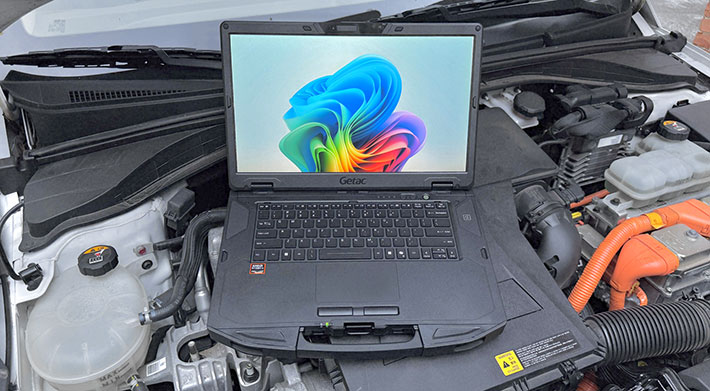
Power and battery life
Now that we've looked at the S510AD's performance, what's the price to pay for it all in terms of battery life?.
Battery life of laptops has come a long way. Gone are the days where a charge just lasted an hour or two. These days, we expect an electronic tool for the job to make it through a full shift on a charge, and ideally without needing to change batteries. That puts manufacturers in a difficult position. Big batteries make a laptop heavy and bulky, and customers don't like that. But customers also don't like it if their laptops can't make it through a shift because the battery is too small.
A common solution to this is to equip rugged laptops with dual batteries. If weight matters, use just one. If battery life matters, use two, with the added benefit of being able to hot-swap batteries. That's the way it is with the S510AD. It has room for two powerful 74.5 watt-hour batteries, for a total of 149 watt-hours. Now let's see how power-efficient the S510AD is.
For battery testing we use UL's PCMark 10 Office Battery benchmark, which continuously exercises the system with workloads representative of common office use. We charge the battery to 100%, calibrate display luminance to 200 nits, and then run the test on battery power. Since the benchmark may begin and end somewhat short of the full 100-to-0% battery capacity, we use the PCMark test log to extrapolate the measured runtime to the full battery capacity.
In our test, the S510AD achieved an extrapolated runtime of 11 hours and 18 minutes on its standard 74.5 watt-hour battery. That translates into average power consumption of 13.19 watt-hours per hour, or 4.55 minutes of runtime per watt-hour.
That's good battery life for a high-performance rugged laptop with a large 15.6-inch display, though the Intel-based S510 we tested in 2024 did better. That machine reached an extrapolated 13 hours and 24 minutes, consuming 10.75 watt-hours per hour and delivering 5.58 minutes of runtime per watt-hour. So while the AMD-based S510AD was substantially faster in most of our performance benchmarks, the Intel S510 was more power-efficient in our PCMark 10 battery testing.
With the optional second 74.5 watt-hour battery installed, total battery capacity doubles to 149 watt-hours. Actual runtime will, of course, depend on workload, display brightness, wireless use, power settings, and other factors.
Nice big display
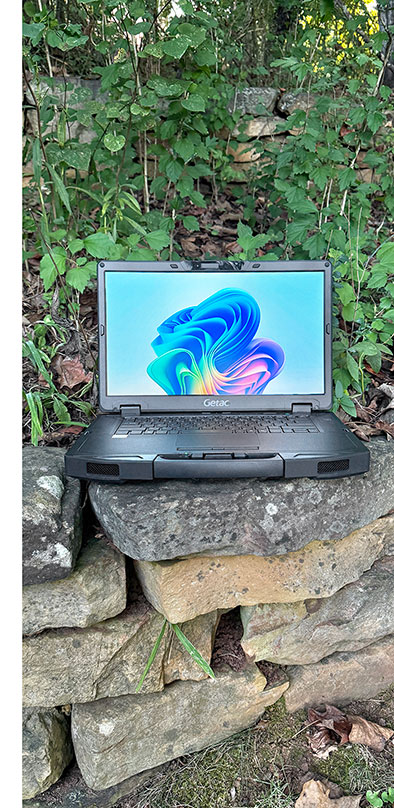 The Getac S510AD's big display measures 15.6 inches diagonally and uses "full HD" 1920 x 1080 pixel resolution, which makes for the widely used 16:9 aspect ratio. At this screen size, 1920 x 1080 resolution amounts to 141 pixels per inch. The Getac S510AD's big display measures 15.6 inches diagonally and uses "full HD" 1920 x 1080 pixel resolution, which makes for the widely used 16:9 aspect ratio. At this screen size, 1920 x 1080 resolution amounts to 141 pixels per inch.
That's reasonably sharp and still the norm in today's rugged laptops. Given the much higher pixel densities now common in smartphones, tablets, and desktop monitors, it'd nevertheless be nice to see higher resolutions becoming available in rugged laptops as well. Something like 2560 x 1440 QHD would provide noticeably more workspace without going overboard on pixel density.
That said, at least 1080p is standard on the S510AD. We're still seeing products in this range where 1366 x 768 pixel resolution is standard and 1920 x 1080 is an option. That'd definitely be too coarse for a big 15.6-inch screen, and so we're glad the S510AD comes standard with 1920 x 1080.
And it doesn't end there — laptop displays must be bright enough to be easily viewed where they are used most, and for this type of machine that's often outdoors. The S510AD comes standard with 1,000 nits luminance, and thanks, Getac, for that.
Standard laptop backlights are generally in the 250 to 400 nits range, not nearly enough for comfortable work outdoors. That's why high-end rugged notebooks may offer 1,000 nits or more, with some reaching 1,500 nits. Our pre-production S510AD review unit measured 850 nits. That's short of the nominal 1,000-nit specification, but still considerably brighter than conventional laptop displays.
Getac also got two other important aspects of outdoor laptop displays right. One is horizontal and vertical viewing angles. There is nothing worse than a display that changes in color or contrast or both when viewed from different angles. The S510AD display doesn't have this problem. It has near-perfect horizontal and vertical viewing angles, and that makes a BIG difference.
Glossy displays rule in consumer laptops and tablets because they "pop" indoors and look great in environments with few reflections, but matte or semi-matte displays can be much better outdoors. They diffuse reflections in a controlled manner, making the screen easier and more pleasant to view under the typically high-contrast and ever-changing lighting conditions encountered outdoors.
As far as touch goes, it's really not mandatory in laptops, but as time goes on, everyone is getting so used to touch and tap and pinch and zoom that many people expect it now. The S510AD comes standard without touch; Getac's very good LumiBond™ capacitive multi-touch is optional.
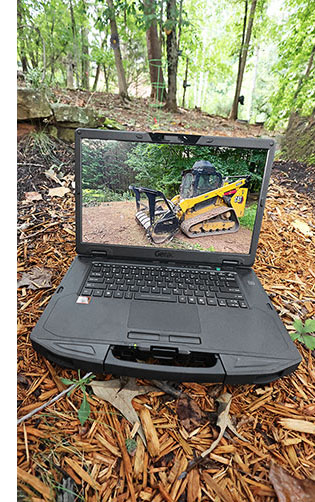
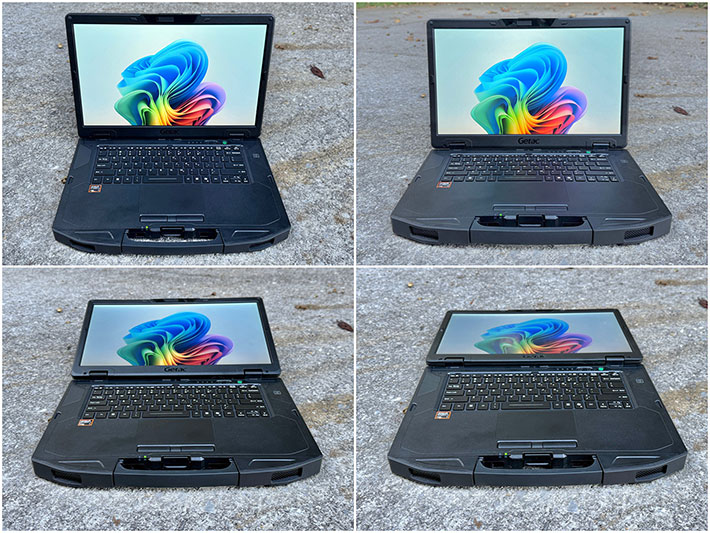
Below are a few pictures of the S510AD outdoors on a bright afternoon. Note how brightness and contrast change only minimally at different viewing angles. What you can't see in the pictures is how the semi-matte display often mutes reflections to the extent that they aren't a distraction.
How rugged is the Getac S510AD?
Until recently, Getac would have called the S510AD a "semi-rugged" laptop, just like its 14-inch S410. Over the years, we've often expressed discontent and frustration with the terminology used to describe the ruggedness of computing equipment. Because, in the absence of any official standards, "semi-rugged" and "rugged" and "fully rugged" really mean nothing at all. "Semi-rugged" in particular was grating — what's that? Semi-good? Semi-sufficient? Half of what it should be? You get the idea.
Now it seems that Getac is no longer using the term. The S510AD is called rugged, as are the Intel-based S510 and the S410, whereas the B360 and Getac's other machines of heavier, more protected build are "fully rugged." Still not perfect, but better.
As is, Getac says the S510AD was designed "to meet or exceed MIL-STD-810H temperature, shock, humidity, altitude and vibration specifications." Getac also claims a three-foot drop. That's generally enough to let a unit survive a fall from a desk or other typical working surface. The S510AD's corner rubber bumpers certainly help, as does the integrated rubber handle.

The Getac S510AD spec sheet lists MIL-STD-810H certification for drop, shock, vibration, dust, altitude, high/low temperature and humidity testing.
Getac says the S510AD can operate between -20° and 145° Fahrenheit (-29° to 63°C). That's a wider range than such machines used to cover, and makes the S510AD suitable for use in almost any environment. The wide range comes in handy in deployments such as closed vehicles or around freezers.
As far as sealing goes, there's been steady progress over the years in this class, where initially there was no ingress protection against liquids at all. Over time, manufacturers realized that it does get wet outdoors on the job, and protection against liquids gradually improved. It's now generally up to IP53 in the class previously known as semi-rugged. In IP53, the "5" means the unit is protected against dust intrusion sufficient to interfere with operation, and the "3" means protection against water spray up to 60 degrees from vertical. So Getac designed the S510AD to handle common occurrences such as spills onto the keyboard, and all ports have protective covers that, while not watertight, do a good job keeping water and debris away.
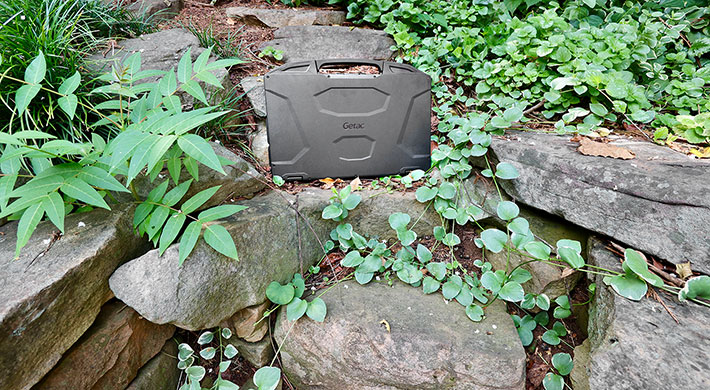
Getac refers to MIL-STD-810H certifications, and we'd still like to see the actual test results listed in greater detail in the spec sheet. What became clear in our testing, though, is that the S510AD feels remarkably sturdy and trust-inspiring, and plenty capable of handling the likely abuse encountered in its intended deployments. Interested parties may also want to take a look at Getac's Certifications page.
What it boils down to is that the Getac S510AD is much more damage-resistant than conventional consumer or enterprise laptops, but it's not as comprehensively protected against the elements as Getac's fully rugged machines, nor is it designed to take quite the same degree of abuse.
Summary: The Getac S510AD
The Getac S510AD is an interesting addition to the company's rugged laptop lineup. Physically, it is almost identical to the Intel-based S510 introduced in 2024. It has the same compact design, the same large 15.6-inch display, the same batteries, the same extensive connectivity, and the same overall degree of ruggedness. The big difference is inside: instead of Intel Core Ultra processors, the S510AD is built around AMD Ryzen AI 300 Series processing technology.
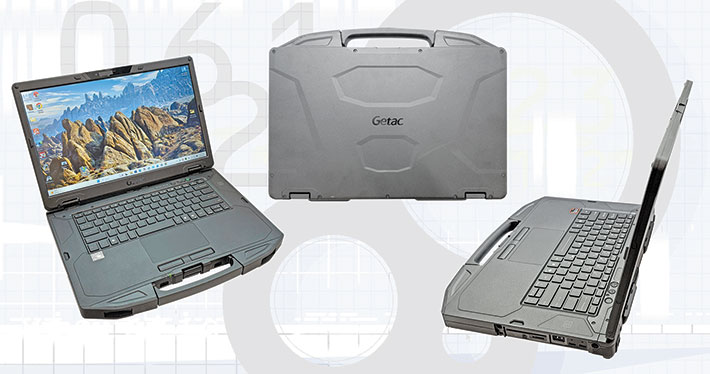
Weighing in at barely over five pounds, the S510AD remains remarkably compact and handy, especially for a rugged design with a big screen, extensive connectivity, an integrated carry handle, and a media bay that can still accommodate an optical drive for those who need one. Its practical build looks and feels sturdy, without the constant fear that it may get scratched up.
Our review unit came with an AMD Ryzen AI 7 PRO 350 processor with Radeon 860M graphics and an XDNA 2 neural processing unit rated at up to 50 TOPS. That makes the S510AD a Microsoft Copilot+ PC and gives it considerably more dedicated AI processing capability than the first-generation Intel Core Ultra technology used in the original S510.
More importantly, the AMD-based S510AD performed very well in our benchmark testing. In most of our current benchmark suites, the S510AD substantially outperformed the Intel-equipped S510 as Getac configured the two systems we tested. The AMD machine didn't win every benchmark, and differences in discrete graphics and other components mean this isn't a laboratory comparison of AMD and Intel processors alone, but the overall performance advantage was substantial.
That additional performance came at a price. In our PCMark 10 Office Battery testing, the S510AD ran for an extrapolated 11 hours and 18 minutes on its standard 74.5 watt-hour battery, compared to 13 hours and 24 minutes for the Intel S510. The S510AD averaged 4.55 minutes of runtime per watt-hour compared to 5.58 for the Intel machine. So in the two configurations we tested, the AMD system was generally faster, whereas the Intel system was more power-efficient.
So what does the S510AD bring to Getac's rugged laptop lineup? More than simply an AMD alternative for customers who prefer AMD processors. It brings strong overall performance, substantially more NPU capability, modern RDNA 3.5 integrated graphics, and an AMD PRO option for enterprise customers, all in the proven S510 platform.
The result is a compelling alternative to the Intel-based S510, and also an interesting indication that AMD has become a serious contender in a rugged computing market that for decades has been dominated almost entirely by Intel. -- Conrad H. Blickenstorfer, September 2026
|
Getac S510AD Specifications
|
| Added/changed |
Full review 09/2026
|
| Type |
Rugged laptop
|
| Processor |
AMD "Krackan Point" Ryzen AI 5 340 (3P and 3E cores) (default) or
AMD "Krackan Point" Ryzen AI 5 PRO 340 (3P and 3E cores) (default) or
AMD "Krackan Point" Ryzen AI 7 350 (4P and 4E cores) (default) or
AMD "Krackan Point" Ryzen AI 7 PRO 350 (4P and 4E cores) (default) or
|
| CPU speed |
Ryzen AI 5 340: base clock 2.00GHz, max clock up to 4.80GHz
Ryzen AI 5 PRO 340: base clock 2.00GHz, max clock up to 4.8GHz
Ryzen AI 7 350: base clock 2.00GHz, max clock up to 5.00GHz
Ryzen AI 7 PRO 350: base clock 2.00GHz, max clock up to 5.00GHz
|
| CPU TDP |
All 28 watt processor base power / 15/54 watt configurable TPD
|
| OS |
Windows 11 Pro
|
| Graphics |
Ryzen AI 5 340: AMD Radeon 840M, 4 cores, up to 2.90GHz or
Ryzen AI 5 PRO 340: AMD Radeon 840M, 4 cores, up to 2.90GHz or
Ryzen AI 7 350: AMD Radeon 860M, 8 cores, up to 3.00GHz or
Ryzen AI 7 PRO 350: AMD Radeon 860M, 8 cores, up to 3.00GHz
Optional NVIDIA Quadro RTX A500 discrete graphics controller
|
| NPU |
All XDNA 2 NPU (up to 50 TOPS)
|
| Memory |
16GB to 64GB 4800MHz DDR5 in two sockets
|
| Disk/drive |
256GB up to 2TB PCIe NVMe SSD
Optional Multimedia bay 2nd storage 512GB / 1TB SATA SSD
|
| Display size and resolution |
Semi-matte 15.6" FHD LCD with 1920 x 1080 pixel resolution; optional: capacitive multi-touch LumiBond display
|
| Digitizer/Pen |
NA
|
| Keyboard |
83-key, full-scale LED backlit membrane keyboard |
| Media Bay |
Optional 1D/2D imager barcode reader OR
Optional DVD super multi drive OR
Optional 2nd Storage OR
Optional NVIDIA Quadro RTX A500 discrete graphics controller
|
| Slots |
Optional: microSDXC Card
Optional: Smart Card reader, 1 x Nano SIM card
Optional: Dual SIM (Nano-SIM 4FF and e-SIM)
|
| Housing |
Unknown, use of post-consumer recycled materials, protective port covers
|
| Temperature |
-20° to 145°F (-29° to +63°C) |
| Humidity |
95% RH non-condensing |
| Vibration |
MIL-STD-810H
|
| Enclosure Class |
IP53 |
| Vibration: Functional |
MIL-STD-810H certified |
| Shock: Transit Drop |
3-foot drop |
| Altitude |
unknown
|
| Size (inches) |
14.8 x 10.9 x 1.5 inches (375 x 277 x 39 mm)
|
| Weight |
Starting weight 5.18 pounds (2.35kg); 7.06 pounds (3.2 kg) as tested with dual batteries |
| Power |
10.8 Volt 6,900 mAh 74.5 watt-hours Li-Ion battery
Optional 2nd 10.8 Volt 6,900 mAh 74.5 watt-hours Li-Ion battery
AC adapter (65W, 100-240VAC) or optional AC adapter (90W, 100-240VAC, 50/60Hz)
|
| Communication |
Wi-Fi 7, 802.11be
Bluetooth v5.4
Optional dedicated GPS with L1/L5
Optional 4G LTE WWAN
Optional 5G Sub-6 with integrated GPS
Optional RF antenna pass-through for GPS, WWAN and WLAN |
| Camera |
Optional 5MP camera for Windows Hello face-authentication; optional 5M pixels webcam
|
| Interface |
1 x USB 4 Type-C
1 x USB 3.2 Gen 1 Type-A
1 x USB 3.2 Gen 2 Type-A
1 x RJ45 gigabit LAN
1 x HDMI 2.0
Docking connector
Optional 2nd USB 4 Type-C
|
| Price |
Inquire |
| Web page |
Getac S510AD web page
|
| Spec sheet |
Getac S510AD spec sheet |
| Warranty |
3-year limited warranty standard |
| Contact |
Getac USA
15495 Sand Canyon Ave. Suite 350 Irvine, CA 92618
Tel : 949-681-2900
GetacSales_US@getac.com | www.getac.com/us/
|
|
|
| |
